Starting a Small Business in Indiana: A Marketing Guide
You have the idea. Now what? From building a brand and website to figuring out Google, social media, advertising, e-commerce, and AI search, here’s how to build the right marketing foundation for your new business without trying to do everything at once.
Before You Start Marketing, Know What You're Building
Starting a small business in Indiana is exciting. It’s also one of the fastest ways to discover that approximately 400 things suddenly need your attention at the exact same time.
You need a name. A logo. A domain. A website. Social media accounts. Maybe a Google Business Profile. Someone tells you that you need SEO. Someone else says you need to run Facebook ads. Your cousin knows a guy who can build you a website for $300. And somewhere on the internet, someone is yelling that if your business isn’t optimized for AI search immediately, you’re already behind.
It can feel like standing in the middle of a hardware store with a cart full of tools before you’ve even decided what you’re building.
So, let’s simplify it.
You do not need every marketing tool available to successfully launch a small business. You need the right tools for the business you’re actually building, in the right order.
Before spending heavily on marketing, get clear on a few things.- What exactly are you selling?
- Who is most likely to buy it?
- Where are those customers located?
- What problem are you solving for them?
- Why should they choose you instead of another option?
- How will someone actually become a customer?
- What does that person need to see or understand before they feel comfortable buying?
Those answers determine almost everything that comes next.
Choose a Business Name That Can Grow With You
Before you order 500 shirts with your new logo, make sure the business name is actually usable.
Can you secure a reasonable domain name? Are the important social media handles available? Are there already several companies with nearly identical names operating in Indiana or your industry?
And think beyond opening day.
“Bob’s Johnson County Deck Washing” might describe the business perfectly right now, but what happens when Bob adds siding, roofs, and commercial pressure washing or expands into another county? Or brings on a partner/ changes hands?
Your business name doesn’t have to explain every service you provide. It needs to be memorable, usable, and capable of growing with you.
Establish a Professional Brand
You do not need to spend six months debating between two shades of blue, but you do need a brand that looks legitimate.
For most small businesses, that means a professional logo, consistent colors and typography, and a visual identity that works everywhere from your website and social media to a truck door, yard sign, uniform, estimate, or invoice.
Think of branding like showing up to a jobsite.
Your clothes don’t perform the work for you, but showing up looking prepared and professional affects someone’s first impression before you’ve picked up a tool.
Your branding works the same way.
It isn’t the business, but it helps communicate what kind of business someone can expect to work with.
Your Website Should Do More Than Prove You Exist
A small business website isn’t just an online business card.
It should help potential customers find you, understand what you do, decide whether they trust you, and take the next step.
One of the most common small-business website mistakes is a homepage that essentially says:
“Welcome to ABC Company. We provide quality service and excellent customer satisfaction. Contact us today!”
Okay…but what do you actually do? What solution are you solving? Where do you do it? Why should someone call you?
A strong service-business website should clearly communicate:
- Your primary services
- The areas you serve
- Why customers choose you
- Examples of your work
- Reviews or testimonials
- How to contact you
- What happens after someone reaches out
Your primary services may deserve individual pages, too.
If you install concrete patios, driveways, sidewalks, and decorative concrete, don’t make Google (or your potential customer) dig through one paragraph to figure that out.
Make it obvious.For Local Businesses, Google Matters From the Beginning
For many service companies, a Google Business Profile can become one of their most valuable digital assets.
When someone searches for things like “concrete contractor near me,” “plumber in Franklin Indiana,” or “landscaper near Greenwood,” Google is trying to determine which companies are relevant, legitimate, and geographically appropriate.
Your website, Google Business Profile, reviews, local listings, and overall online presence all help provide those signals.
Set up your profile properly. Choose appropriate categories. Add your services. Upload real photos. Keep your hours and contact information accurate.
And don’t create the profile and forget it exists for the next four years.
Then, start asking happy customers for reviews.
Reviews are essentially the internet version of asking your neighbor:
“Do you know somebody who does this?”
Your website can tell people you’re great.
Hearing it from 50 customers is a little more convincing.
SEO Isn't a Switch You Flip After the Website Launches
SEO stands for search engine optimization, but don’t let the acronym make it sound more mysterious than it needs to be.
At its core, you’re helping search engines understand:
This is who we are. This is what we do. This is where we do it. And there is evidence that we’re legitimate and good at it.
Your website structure, service pages, Google Business Profile, reviews, local listings, business information, and helpful content all contribute to that picture.
SEO also isn’t like flipping on a light switch.
It’s more like planting grass.
You prepare the ground, plant it correctly, continue taking care of it, and give it time. Eventually, you’ve built something valuable that doesn’t disappear the second you stop paying for clicks.
That’s why it’s better to think about SEO as part of the foundation rather than something you “add to the website” six months later.
Paid Advertising Works Better When the Foundation Is Ready
Google Ads, Meta advertising, and other paid channels can help a new business generate awareness and leads much faster than waiting for organic visibility alone.
But advertising isn’t magic.
If you’re paying to send people to a confusing website with no reviews, unclear services, and a contact form that doesn’t work, you’re essentially paying for a billboard that points toward an abandoned building.
Build the destination first.
Then pay to send people there.
And once you’re spending money on advertising, track what actually happens.
Phone calls, contact forms, appointments, purchases, and qualified leads matter far more than how many people saw or clicked an ad.
Starting an E-Commerce Business? Your Website IS the Store
An e-commerce company has a different challenge.
You don’t just need someone to find you. You need someone to discover a product, want it, trust a company they may have never heard of, complete a transaction, and ideally come back again.
For an e-commerce company, your website isn’t simply part of your marketing.
Your website is your storefront, salesperson, product shelf, and checkout counter.
Before obsessing over your website theme, packaging, or Instagram feed, make sure you understand who the product is for, why they would want it, what makes it different, and why someone should buy it from you.
There is no marketing strategy powerful enough to permanently overcome a product people don’t want.
Marketing is a megaphone.
Make sure you have something worth amplifying.
Make Buying Online Ridiculously Easy
Imagine walking into a physical store where the aisles aren’t labeled, half the products don’t have prices, the shelves aren’t organized, and nobody can find the checkout counter.
You probably aren’t sticking around.
Online shoppers are even less patient.
Your e-commerce website should include:- Simple navigation
- Strong product photography
- Useful product descriptions
- Transparent pricing
- Clear shipping and return information
- Trustworthy payment options
- A strong mobile experience
- A simple checkout process
Every unnecessary hurdle gives someone another opportunity to close the tab.
Your Product Content Has to Do the Selling
Online customers can’t pick up your product.
They can’t feel it. They can’t turn it over. They can’t try it on or ask an employee what it looks like in real life.
Your photos, videos, product descriptions, FAQs, and reviews have to do that work for them.
Show scale. Show details. Show the product being used. Answer common questions before someone has to ask.
For an e-commerce business, great content isn’t decoration.
It’s part of the sales process.
E-Commerce Marketing Doesn't End at Social Media
Social media can be an excellent discovery tool for an e-commerce brand, but posting because “we haven’t posted since Tuesday” isn’t a marketing strategy.
Show the product being used. Demonstrate it. Answer questions. Share customer experiences. Explain what makes it different. Give people an actual reason to stop scrolling.
Email marketing should also be considered early because not everyone purchases during their first visit.
Welcome sequences, abandoned-cart emails, promotions, product launches, and customer follow-up give you opportunities to continue the relationship after someone leaves your website.
And before you start pouring money into advertising, set up analytics and conversion tracking.
As your business grows, you should be able to answer:- Where are customers coming from?
- Which products get the most attention?
- Where do shoppers leave the website?
- Which ads create purchases?
- What does acquiring a customer cost?
- Are customers coming back?
Traffic is nice.
Traffic doesn’t pay the electric bill.
Revenue does.Where Does AI Search Fit Into a New Business Marketing Strategy?
AI matters, but you don’t need to throw away everything you know about marketing and start sacrificing laptops to ChatGPT.
People are increasingly using AI-powered search experiences to research businesses, compare products and services, ask questions, and get recommendations.
That makes it important for your business to be clearly understood across the internet.
But here’s the important part:
AI search isn’t disconnected from the rest of your marketing.
Clear website content, well-defined products and services, consistent business information, helpful FAQs, customer reviews, local signals, useful content, and mentions from reputable sources all contribute to a stronger digital footprint.
You don’t build an “AI presence” in a vacuum.
You build a strong business presence online and make it easy for traditional search engines and newer AI-powered systems to understand who you are, what you offer, and why your business may be relevant to someone’s search.
Think of AI search as another lane on the highway, not an entirely different road.
How Much Should a New Business Spend on Marketing?
There is no universal magic number.
A company starting with $2,000 available for marketing needs to make different decisions than a company launching with $20,000.
Instead of only asking: “How much should I spend?”
Ask: “What needs to happen first so the next dollar I spend has the best chance of working?”
If your budget is tight, prioritize the foundation.
Secure the right domain. Establish a professional brand. Build the essential website. Create the profiles customers will actually use. Make sure people can find you and have an easy way to contact you or purchase from you.
Then grow from there.
Don’t spread $1,000 across twelve marketing channels and wonder why none of them worked.
That’s like trying to water the entire yard with one cup of water.
Choose your priorities and do them well.
What Marketing DON'T You Need on Day One?
This may be one of the most important things a new business owner can hear:
You don’t need everything.
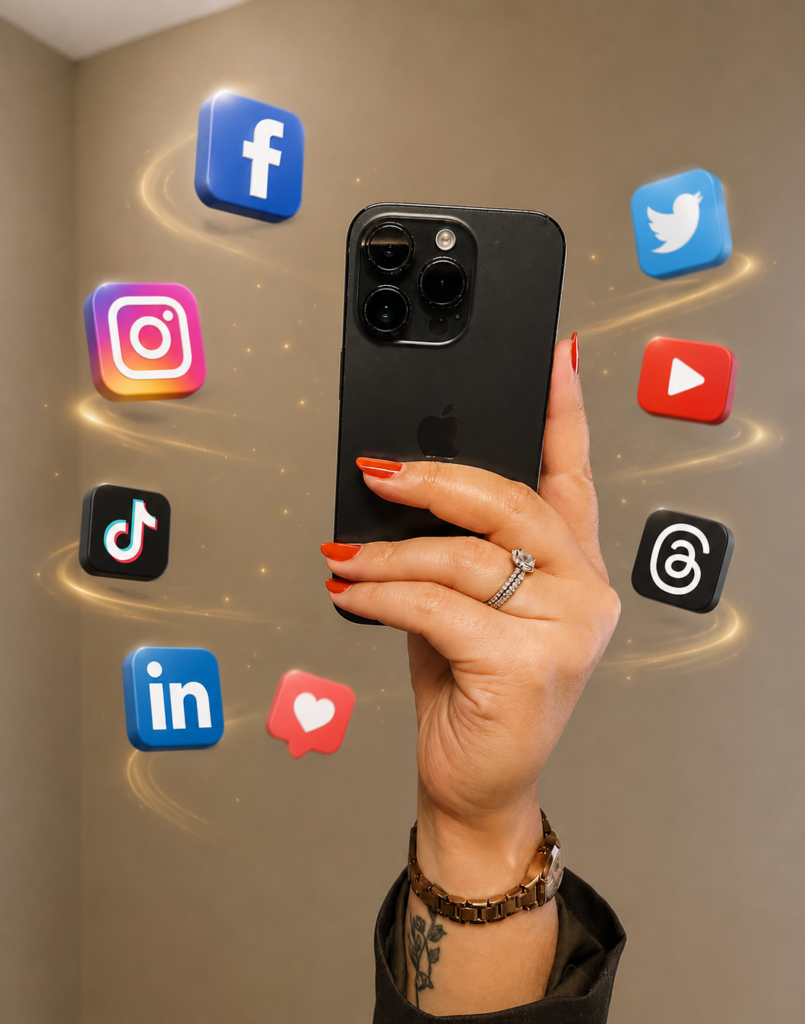
You probably don’t need to be active on six social media platforms.
You don’t necessarily need to spend thousands per month on advertising before you’ve generated your first customer.
You don’t need a 75-page website because someone told you more pages are always better for SEO.
You don’t need every new AI marketing tool you’ve seen in a sponsored Instagram Reel.
And you don’t need to spend money simply because another business owner told you, “You HAVE to do this.”
Every piece of your marketing should have a job.
Before investing in something, ask:- Why are we doing this?
- What are we trying to accomplish?
- How will we know whether it’s working?
If you can’t answer those questions yet, you may not be ready to spend money on it.
Don't Forget the Business Side of Starting a Business in Indiana
Marketing is only one part of starting a small business in Indiana.
Before opening your doors, you’ll also need to determine the appropriate business structure, registration requirements, taxes, insurance, licenses or permits that may apply to your industry, business banking, and other operational requirements.
Those aren’t marketing decisions, and they’re not areas where you should rely on your marketing company for legal or accounting advice.
Talk with the appropriate professionals and use official State of Indiana resources to understand what’s required for your specific business.
Get the business itself set up correctly.
Then make sure people know it exists.
Build What You Need Today With Room for Tomorrow
One of the smartest things you can do when starting a business is resist the urge to make every decision based solely on opening day.
You don’t need to build the entire skyscraper today.
But you should make sure the foundation can support another floor.
Choose a domain you won’t hate in three years. Build a website that can expand when you add services or products. Set up analytics correctly before you desperately need the data. Develop branding that can work on something bigger than a Facebook profile picture.
Most importantly, don’t confuse doing more marketing with doing better marketing.
A new business doesn’t need every tool in the hardware store.
It needs the right ones for what it’s trying to build.
At Plaski Advertising, we work with small businesses at many different stages. Some come to us with an established company that’s ready for its next phase. Others come with a name, an idea, and a whole lot of questions about what needs to happen next.
Our job isn’t to pull every marketing service off the shelf and put it in your cart.
It’s to understand where you’re trying to go, what you already have, what’s missing, and what makes sense to build next.
Because starting a business is expensive enough.
Your marketing dollars should have a job.
The Short Version
If you don’t have time to read the whole guide, here’s what we want every new business owner to know:
- Know what you're building before you start marketing it. A local service business and an e-commerce company need very different strategies.
- Get the foundation right first. Your business name, domain, branding, website, and basic online presence should be built with room to grow.
- If you're a service business, focus on being found locally. Your website, Google Business Profile, reviews, local SEO, and clear service information should be early priorities.
- If you're an e-commerce business, make buying easy. Your website is your store, so product photography, descriptions, mobile usability, checkout, analytics, and email marketing matter.
- Don't pay for traffic before you're ready for it. Advertising works much better when you're sending people somewhere designed to turn them into leads or customers.
- SEO and AI search start with the same good fundamentals. Make it easy for search engines, AI platforms, and real people to understand who you are, what you do, and why they should trust you.
- You don't need every marketing channel on day one. Spend where it makes sense for your business instead of spreading a limited budget across everything.
- Every marketing dollar should have a job. Know why you're spending it, what you want it to accomplish, and how you'll determine whether it worked.
- Build for today without boxing yourself in tomorrow. Your marketing should be able to grow alongside your business.
Starting a Business in Indiana? Let's Build the Right Foundation.
Whether you’re starting a local service company, launching an e-commerce brand, or turning an idea into something real, Plaski Advertising can help you determine what your business actually needs to market it effectively.
From branding and website development to e-commerce, SEO and AI search strategy, social media marketing, and digital advertising, we’ll help you determine what makes sense now, what can wait, and how those pieces can work together as your business grows.
You don’t need everything on day one.
You just need to know what comes first.