Social Media Marketing That Keeps Your Business Visible, Relevant & Trusted
Your business does not need to go viral to have a successful social media presence. It needs to show up consistently enough that when the right customer needs what you offer, your name already feels familiar.
Plaski Advertising provides social media strategy, content planning, content creation and ongoing account management for small businesses throughout Johnson County, Indianapolis, Central Indiana and beyond. We help you determine what to say, where to say it and why it matters so social media supports your business instead of becoming another unfinished task on your to-do list.
Social Media Should Support Your Business, Not Just Feed an Algorithm
More likes are not always the goal, more followers do not automatically mean more business, and posting five times a week does not mean your social media is working better than a company posting twice.
For most small businesses, organic social media plays a much bigger role in familiarity, credibility and trust. Think about choosing between two local contractors. One has not updated Facebook since last summer. The other regularly shares completed projects, answers common customer questions, introduces the people doing the work, posts useful seasonal advice and gives you a pretty good idea of what it would be like to hire them.
Even before you make the call, one business already feels more familiar.
That is the job social media can do exceptionally well. At Plaski, we are not interested in posting just to keep an algorithm happy. We build content around what your customers need to see, learn and remember about your business.
“Do I Need to Be on TikTok?”
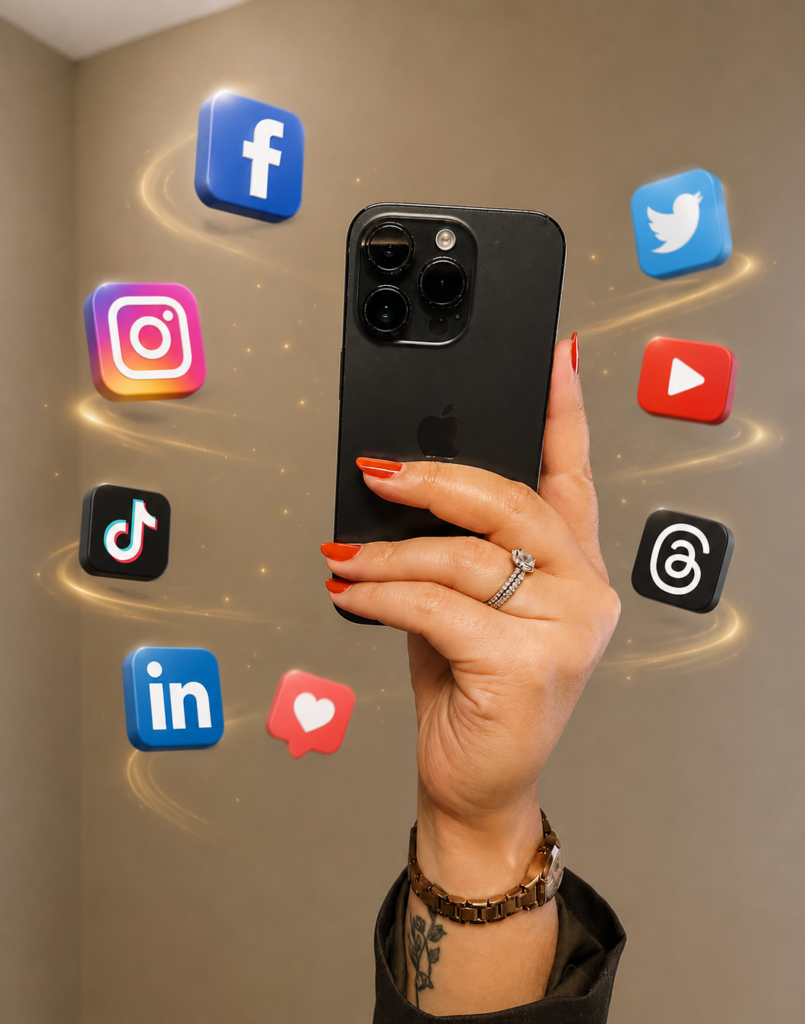
We get this question a lot, especially from small businesses that hear they are “supposed” to be on every new platform. Our answer usually starts with another question: who are you actually trying to reach?
The newest or fastest-growing platform is not automatically the best place to spend your marketing time or budget. According to Pew Research Center’s Social Media Use research, Facebook continues to reach a broad percentage of U.S. adults, while Instagram and TikTok tend to skew younger.
For many local service businesses, the age breakdown matters even more. Facebook remains heavily used by adults in the 30–49 and 50–64 age groups, which often overlap with homeowners and household decision-makers. TikTok may be a great fit for a younger audience, a highly visual brand, recruiting efforts or certain consumer products, but that does not mean every contractor, HVAC company, concrete company or water treatment business should immediately devote limited resources to it.
If your marketing budget is limited, we would rather focus on reaching more of the people who are actually likely to buy your service than spend your time chasing whatever platform happens to be getting the most attention that month.
That is why we do not start social media strategy with, “What platforms should we post on?” We start with, “Who needs to see you?” Then we determine where those people are most likely to spend their time.
What Does Social Media Management Actually Include?
Social media management is more than writing a Facebook caption and clicking publish. A thoughtful strategy connects your audience, services, brand, business goals, seasonality, visuals and broader marketing efforts.
Social Media Strategy
Before creating content, we need to understand what social media is supposed to accomplish for your business. You may be trying to build brand recognition, support an established referral network, help potential customers understand complicated services, recruit employees, keep customers informed, show the quality of your work, promote events or support a larger advertising campaign.
Different goals require different types of content, which is why we do not believe in handing every client the same package of generic posts.
Monthly Content Calendars
A social media content calendar is a planned schedule of what your business will communicate throughout the month. It keeps us from reaching Tuesday morning and asking, “What should we post today?”
Instead, we plan content around your services, frequently asked questions, seasonal opportunities, company updates, customer needs, promotions, community involvement and larger marketing priorities. For a contractor, that might include a completed project, a common customer question, seasonal advice, a testimonial, a team feature, an explanation of a service and a timely call to action.
The exact mix changes from business to business because a calendar should not exist just to fill squares. Every post should have a reason for being there.
Content Creation
Once we know what we are talking about, we create the content needed to communicate it. That may include custom graphics, written captions, educational content, project showcases, before-and-after posts, employee features, customer testimonials, promotional campaigns, Reels, short-form video, seasonal content and community-related posts.
When stronger visuals are needed, our Video & Photo services can give your business an original library of professional images, project footage, testimonials and branded video content that can be used across social media, your website and advertising.
Scheduling & Publishing
Once content is approved, posts can be scheduled so your business maintains a consistent presence without someone on your team remembering at 8:47 p.m. that nobody has posted this week.
Consistency matters, but that does not mean quantity for quantity’s sake. Two strong posts that actually communicate something useful can be far more valuable than five filler posts that nobody remembers.
Reporting & Strategy Adjustments
We review performance to understand what your audience is responding to, what content is reaching the right people and what we can learn from it. We then use that information to make future content smarter.
Social media should evolve alongside your business rather than running on the same autopilot calendar month after month.
A Content Calendar Should Know What Month It Is and Where You Live
One of the biggest advantages of having an actual person involved in your marketing is context. Central Indiana does not operate on the same calendar as every business in America.
May means race season around Indianapolis. Summer brings county fairs, festivals, vacations, construction projects and outdoor events. Back-to-school changes routines for local families. Fall brings football, festivals, colder mornings and homeowners thinking about what they need to finish before winter. The first major storm of the season matters to roofers and tree companies, while freezing temperatures matter to plumbers, HVAC companies and water treatment businesses.
A contractor wrapping up a great project in Greenwood, Franklin, Bargersville or Center Grove has a much better opportunity for meaningful local content than posting a generic “Happy National Something Day” graphic that has nothing to do with the people following the page.
Good local content understands what is happening around your customer. That is one of the reasons working with a Johnson County-based marketing company is different. We do not need to Google what Central Indiana feels like in February. We are here too.

Organic Social Media and Meta Ads Are Not the Same Thing
Posting organically on Facebook and Instagram is not the same thing as running paid Facebook and Instagram advertisements through Meta Ads Manager, and understanding that difference is important when deciding where your marketing budget should go.
Organic social media helps your business stay visible to existing followers, demonstrate expertise, build familiarity and give potential customers another place to validate your company. Meta advertising allows you to pay to reach strategically selected audiences beyond the people already following your page.
Imagine a landscaping company. Its organic Facebook page may show months of beautiful finished projects, helpful seasonal tips and customer testimonials. That history builds trust when someone researches the company. A Meta advertising campaign can then take one of those strong project transformations and intentionally put it in front of homeowners who have never heard of the business.
They can work together, but they are doing different jobs.
Our Paid Media services include Meta advertising and Google Ads management when your business needs paid reach, lead generation, retargeting or a more aggressive customer-acquisition strategy. We also break down the differences in more detail in our guide, Google Ads vs. Facebook Ads vs. Organic Social Media.
The simplest way to think about it is this: organic social media builds familiarity, paid social buys targeted reach and Google Ads captures people who are actively searching for a solution.
Knowing which problem you are trying to solve helps determine where your money belongs.
We Don't Judge Your Social Media by How Many Likes It Gets
Engagement tells us something, but it does not tell us everything. A post getting 75 likes does not automatically make it more valuable than one getting 12.
Maybe those 12 interactions came from homeowners directly inside your service area. Maybe someone saw the post, never liked it, remembered your business six weeks later and Googled your name when they needed an estimate. Maybe someone sent the post to a spouse through a text message. Maybe a potential customer visited your profile, clicked through to your website and called without ever interacting with the post at all.
The customer journey is rarely as clean as “saw post, clicked like, bought service,” which is why we do not want your monthly report to simply say, “Congratulations, you got 17 more likes.”
Depending on the goals of the account, we may look at relevant reach, profile activity, website traffic, direct messages, inquiries, content shares, saves, audience growth, video views, watch behavior and measurable calls or form submissions when tracking allows. We also look for patterns in which topics consistently generate interest and how social media is supporting your other marketing channels.
Engagement is useful information, but your business does not pay its bills in heart reactions. The goal is to use the data to make better marketing decisions.

Social Media Doesn't Work in a Vacuum
Someone may see your Facebook post today and Google your company next month. From there, they might read your reviews, visit your website, look through your project gallery, compare you with another business and finally request an estimate.
That is why we look beyond the social media account itself.
Your Website Development matters because customers need somewhere trustworthy to go when they click. Your Search Engine Optimization matters because people may remember what you do without remembering your exact business name. Your Paid Media can help you reach people outside your existing audience, while AI Search Optimization is becoming increasingly important as customers use ChatGPT and AI-powered search experiences to research companies and services.
Your Video & Photo content gives all of those channels something original and credible to work with.
Marketing works better when the pieces support one another. Social media is one of those pieces, not the entire puzzle.
“Can't AI Just Handle My Social Media Now?”
Honestly, sometimes it can handle a lot more than people realize.
AI is moving fast! What started as tools that could help write a caption or brainstorm a few ideas has expanded into systems that can analyze information, generate images, edit video, repurpose content, summarize performance, organize data, trigger automations and, in some cases, carry out multi-step workflows with very little hands-on involvement.
We think that’s exciting.
At Plaski, we are not interested in pretending AI is something businesses should avoid. We use it, we experiment with it and we encourage our clients to lean into it when it can save time, reduce repetitive work or help us make better decisions. Our AI Marketing approach is built around finding practical ways to use new technology without adopting something just because it happens to be the newest thing everyone is talking about.
The important distinction is that using AI and having a marketing strategy are not the same thing.
AI might help turn one project video into a Reel, a Facebook post and an email. An automation might schedule that content, organize incoming leads or move information between systems without anyone touching it. An AI agent may eventually be able to handle even more of that process from beginning to end.
But somebody still has to decide whether that project is what your business should be talking about in the first place.
Maybe your team is already booked out for that service and you need to promote something else. Maybe the offer in the caption is outdated. Maybe a post that sounds perfectly polished does not sound anything like your company. Maybe your customers have been asking the same question repeatedly and that should take priority over whatever topic an AI tool suggested. Maybe something happened locally this week that completely changes what content would actually feel relevant.
That context matters.
There are also things we simply do not want to put on autopilot. Brand reputation, customer communication, sensitive information, claims about your services and anything that could create confusion for a customer deserve human judgment. AI can be incredibly capable while still occasionally being confidently wrong, missing context or making a decision that technically makes sense but is completely wrong for the business.
The technology will keep changing, and that is exactly why we think the best approach is collaborative. Let AI handle the things it does well. Automate the repetitive pieces when it makes sense. Let people spend more time on strategy, creativity, customer understanding and the decisions that actually move the business forward.
We are not trying to compete with AI. We want to know how to use it well.
Because the future of marketing probably is not human or AI.
It is knowing when you need which one.

Why Choose Plaski Advertising for Social Media Marketing?
There are plenty of companies willing to sell you a package of 12 posts per month. That is not what we are interested in selling.
We are interested in understanding the business behind those posts.
Plaski Advertising is based in Johnson County, Indiana, and works with contractors, home-service companies, professional services, nonprofits, real estate professionals, municipalities, retailers and other organizations throughout Central Indiana and beyond. That variety gives us a different perspective because we understand that social media needs to function differently depending on the business.
A contractor does not need to dance on TikTok to prove they are good at installing concrete. A professional service company may need to build trust and authority more than it needs entertainment content. A nonprofit may need storytelling and awareness, while a local retailer may benefit from products, events and more frequent community interaction.
Sometimes the most valuable Facebook post of the month is simply a straightforward photo of excellent work with a clear explanation of why it matters.
Because social media is only one part of what we do, we are also thinking about what happens after someone sees the post. Can they find you on Google? Does your website support what we just told them? Is there an obvious way to contact you? Are your ads communicating the same offer? Do your reviews reinforce the reputation you are trying to build?
That is the difference between managing a social media page and helping manage a marketing strategy.
Social Media Marketing Services
Social Media Strategy
Monthly Content Calendars
Custom Content Creation
Social Media Graphics
Photo & Video Content
Scheduling & Account Management
Social Media Reporting
Frequently Asked Questions About Social Media Marketing
There is no perfect posting frequency for every business. For many small businesses, consistent and thoughtful content is more valuable than posting every day simply to remain active.
The right frequency depends on your audience, available content, goals and budget. We would rather create two useful posts that reinforce your business than five filler posts that say very little.
Not necessarily. TikTok can be extremely valuable for the right business and audience, but platform decisions should be based on where your target customers spend their time.
Pew Research Center’s social media research shows meaningful differences in platform usage across age groups. For many home-service businesses targeting established homeowners, Facebook may deserve more attention because it continues to reach a large percentage of adults in the 30–64 age range. A younger audience may make Instagram or TikTok much more important.
Your customer should determine the platform, not the trend.
Many businesses benefit from being present on both, especially because Facebook and Instagram are both part of Meta’s ecosystem. However, the content strategy and relative importance of each platform should depend on your audience.
Instagram tends to skew younger and is especially visual, while Facebook continues to reach a broad range of adults and can be particularly valuable for local businesses serving homeowners, families and established consumers.
A content calendar is a planned schedule outlining what your business will post and when. A strong calendar considers business priorities, educational topics, projects, promotions, seasonal opportunities, testimonials, company culture and community involvement so content is not being created randomly from week to week.
Organic social media is the unpaid content published to your business’s Facebook, Instagram or other social profiles. It primarily helps maintain visibility, demonstrate expertise and build familiarity with customers and followers.
Meta Ads are paid campaigns that allow a business to intentionally reach selected audiences on platforms such as Facebook and Instagram. Our Paid Media services include this type of campaign management, and we explain the differences in greater detail in our guide to Google Ads vs. Facebook Ads vs. Organic Social Media.
It can, but direct lead generation is not the only role organic social media plays. For many businesses, social media assists the buying process by helping potential customers recognize the company, evaluate its work and build confidence before contacting it.
Businesses that need more predictable or immediate lead generation may also benefit from Paid Media, SEO or a combination of channels.
That depends on the goal. We may evaluate reach, profile activity, website traffic, messages, inquiries, audience growth, video performance, content trends and measurable conversions where appropriate.
Engagement can provide useful information, but we do not treat likes and comments as the sole measure of whether your social media marketing is successful.
AI can assist with content creation, brainstorming, research, organization and analysis. What it cannot automatically provide is complete knowledge of your business, customers, priorities, local market, previous marketing efforts, current campaigns, brand voice and real-world context.
Plaski uses AI as a marketing tool within a human-led strategy rather than treating automated content generation as the strategy itself.
It depends on the account and scope. Existing project photos, team photos and customer-approved content can be extremely useful, and many clients send us ongoing photos from their work.
When a business needs a stronger library of original visual content, Plaski also offers professional Video & Photo services for project photos, testimonials, team content and branded video.
Social media and SEO are different strategies, and social activity by itself does not guarantee higher Google rankings. However, a strong social presence can support your broader digital footprint by increasing brand visibility, distributing useful content, helping customers discover your business and creating additional opportunities for people to visit your website and search for your brand.
If stronger organic search visibility is the primary goal, our Search Engine Optimization services address that more directly.
It can be, especially because homeowners often research companies before making contact. Completed projects, before-and-after photos, educational content, customer experiences and company updates can demonstrate expertise and make your business feel more familiar before someone requests an estimate.
The key is giving social media the right job within your larger marketing strategy rather than expecting it to accomplish everything on its own.
Stop Posting Just to Say You Posted
Your social media does not need more filler, another random holiday graphic, or a Reel made only because someone told you “video is everything now.” It needs a plan that actually reflects your business, your customers and what you are trying to accomplish.
Whether we are helping a Johnson County contractor show off completed work, a Greenwood business stay connected with local customers, a nonprofit tell its story or a company across Central Indiana build a stronger digital presence, the goal is the same: create useful, recognizable content that gives the right people another reason to know, remember and trust your business.
No dancing required. No pointing at floating text. No pretending your concrete company has been waiting its whole life for a trending audio.
Unless, of course, that somehow makes sense for your brand.