Google Ads and Paid Media Management for Indiana Small Businesses
When potential customers are ready to call, schedule, visit, or buy, your business should be easy to find.
Plaski Advertising plans and manages Google Ads, Meta Ads, Local Services Ads, and other paid media campaigns for small businesses throughout Indiana and beyond. Every campaign begins with your goals, your customers, and the actions that matter most to your business.
Whether you need more qualified leads, stronger brand awareness, increased website traffic, or more product sales, we help you choose the right platform and build a campaign designed around a clear purpose.
Every Advertising Dollar Should Have a Job
Paid advertising should do more than increase impressions or send people to your website. It should support a measurable business goal.
Before launching a campaign, we work to understand what success actually looks like for your company. A contractor seeking qualified estimate requests needs a different campaign than a new restaurant building local awareness or an online retailer promoting a product.
A thoughtful paid media strategy should:
- Begin with a clear business goal, not simply a desire to “run ads”
- Match that goal with the platform most likely to reach the right audience
- Focus the budget on the services, products, locations, or offers that matter most
- Use messaging and creative designed for the customer’s stage in the buying process
- Track meaningful actions such as calls, contact forms, appointments, and purchases
- Allow time for Google and Meta to collect data and improve campaign delivery
- Use real performance data to guide future changes and budget decisions
- Provide reporting that explains what happened and what should happen next
Clicks can help us understand interest, but clicks alone are not the goal. We want to know whether your advertising is creating valuable opportunities for your business.
Why Choose Plaski Advertising for Paid Media Management?
Small-business advertising requires more than knowing where to click inside Google Ads or Meta Ads Manager.
A successful campaign depends on the offer, audience, message, creative, website, landing page, conversion tracking, follow-up process, and budget working together. Because Plaski Advertising also specializes in website development, SEO, AI search optimization, content, social media, photography, and video, we can evaluate the complete customer journey behind the advertisement.
We do not measure success by finding the cheapest possible click. A low-cost click has little value if it comes from the wrong person or leads to a website that does not convert.
Plaski is based in Johnson County and works with small businesses throughout Franklin, Greenwood, Bargersville, Indianapolis, Columbus, and communities across Indiana. We bring local market knowledge together with a broader understanding of how customers search, scroll, compare, and make decisions online.
Paid Advertising Services
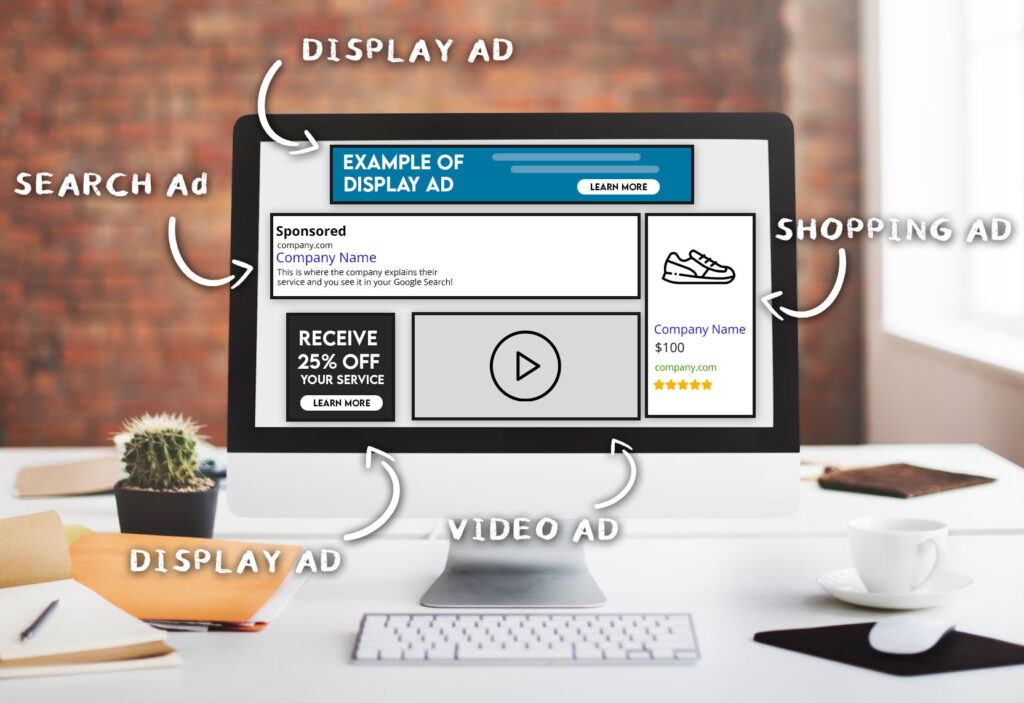
Paid media includes far more than the text advertisements shown at the top of a Google search. We help businesses choose from several advertising options based on their audience, goals, budget, industry, and existing marketing foundation.
Google Ads Management
Local Services Ads
Meta Advertising
Display and Remarketing Advertising
YouTube and Video Advertising
Shopping and E-Commerce Advertising
How Does Paid Advertising Work?
Paid advertising allows your business to pay for visibility with a specific audience. Depending on the platform, advertisements may be shown based on what someone is searching for, where they live, their interests, previous interactions with your business, or the likelihood that they will complete a particular action.
Google and Meta use an auction system to determine which advertisements are shown. Budget matters, but the highest spender does not automatically win every opportunity. Relevance, competition, campaign settings, ad quality, landing-page experience, historical data, and the likelihood of achieving the selected goal can all influence delivery.
That is why every campaign must begin by identifying the right objective.
Your campaign goal might be:
- Building awareness in a specific community
- Increasing Facebook page likes or audience growth
- Generating engagement on an important post
- Promoting an event, sale, or seasonal offer
- Sending qualified visitors to a website
- Generating phone calls or contact-form submissions
- Scheduling appointments
- Selling products online
- Retargeting people who previously visited your website
- Reaching people actively searching for a service
- Introducing a new product or service to a potential audience
An advertisement optimized for engagement will behave differently from one optimized for leads or purchases. We choose the campaign objective based on the action your business actually wants someone to take.
Not sure which platform fits your goal? Read our guide to Google Ads vs. Facebook Ads vs. Organic Social Media.
Google Ads Are About More Than Google Search
Many business owners hear “Google Ads” and picture the sponsored text results that appear when someone searches for a plumber, contractor, restaurant, attorney, or local service.
Search campaigns remain extremely valuable because they can reach people who are already looking for a solution. However, Google Ads can also reach customers across YouTube, Google Maps, Gmail, Discover, shopping results, websites within the Google Display Network, and other Google-owned placements.
Campaign options can include:
- Search campaigns
- Performance Max campaigns
- Demand Gen campaigns
- Display campaigns
- Shopping campaigns
- YouTube advertising
- Remarketing campaigns
- Call-focused advertising
- App campaigns
- Local store and visit-focused campaigns
The right campaign depends on your goal. A Search campaign may be the strongest fit for an emergency service company, while an e-commerce business may benefit from Shopping and Performance Max. A company launching a new service may need visual awareness before enough people begin searching for it.
Advertising Is Entering Google’s AI Search Era.
Google Search is rapidly evolving beyond a traditional list of links. AI Overviews, AI Mode, and other AI-powered search experiences allow people to ask longer, more detailed questions and explore recommendations in a more conversational way.
Google is also introducing and testing advertising experiences designed for these AI-powered searches. Depending on the campaign type, eligibility, query, and Google’s available placements, advertisements may appear within or near newer AI search experiences.
No agency can guarantee that an advertisement will appear in a particular AI-generated result. Paid placement also does not purchase an organic recommendation from an AI platform.
What businesses can do is build a strong advertising foundation with accurate conversion tracking, clear website content, useful landing pages, high-quality creative, appropriate campaign types, and enough data for Google’s systems to understand what the business offers and which actions matter.
Google’s technology may determine more of the delivery, matching, and bidding than it did in the past, but thoughtful human oversight remains essential. Automation can move quickly. It still needs the right goals, information, boundaries, and performance data to make useful decisions.
What Is the Learning Period in Google and Meta Ads?
New advertising campaigns rarely launch in their final, fully optimized form.
Google and Meta need time to understand who responds to an advertisement, which searches or audiences produce results, when people are most likely to act, and how the available budget should be distributed.
During this learning period, performance may fluctuate. One day may generate several leads while another is quieter. Early results provide useful information, but they do not always represent how the campaign will perform after enough data has been collected.
The Google Ads Learning Period
Google Ads may begin producing impressions, clicks, calls, or leads shortly after the campaign is approved. However, automated bidding strategies can take up to several weeks or one to two conversion cycles to calibrate, especially when a campaign is new or undergoes a significant change.
Changes to the budget, bidding strategy, conversion goals, targeting, or campaign structure can send the system back into learning. This is why constantly making large adjustments can prevent a campaign from gathering stable, useful data.
We monitor early performance, address clear problems, and allow appropriate changes enough time to produce meaningful information.
The Meta Ads Learning Period
Meta enters a learning phase when a new ad set launches or when significant changes are made. During this period, Meta explores which people, placements, creative, and delivery patterns are most likely to produce the selected result.
Meta commonly aims for approximately 50 optimization events within seven days for an ad set to exit learning. Smaller local campaigns may not reach that volume quickly and may display a “Learning Limited” status.
That label does not automatically mean a campaign is failing. It may indicate that the audience is smaller, the budget is limited, the conversion action happens less frequently, or the campaign is divided into too many separate ad sets.
We evaluate the actual quality and cost of the results rather than judging success from one platform label.
Why Consistency Matters
Turning a campaign on for one week and shutting it off because it has not immediately perfected itself rarely provides enough information to make a confident decision.
Both platforms perform better when they have a clear objective, reliable tracking, enough budget to reach people consistently, and time to learn from real customer behavior. This is why Plaski typically recommends an initial three-month commitment for ongoing paid advertising campaigns.
That does not mean ignoring poor performance for three months. It means allowing enough time to launch, gather data, make informed adjustments, and evaluate whether the strategy is producing meaningful business opportunities.

How Much Should a Small Business Spend on Paid Advertising?
There is no single advertising budget that fits every business.
A company serving one community will have different needs than a company targeting half the state. A roofing company competing for high-value projects may need a larger budget than a boutique promoting a weekend event. Demand, location, seasonality, competition, average sale value, campaign goals, and the number of services being promoted all affect what is realistic.
The goal is not to spend the most money. The goal is to give the campaign enough budget to collect useful data and compete for the right opportunities without spreading a small-business budget too thin.
Recommended Starting Budget for Google Ads
For many local businesses, a monthly Google Ads budget between $500 and $1,000 can begin generating traffic and collecting useful data. When possible, we generally recommend starting near $1,000 per month for a focused local campaign.
More competitive industries, including roofing, HVAC, plumbing, legal services, healthcare, and other high-value service categories, may require larger budgets because more businesses are competing for the same high-intent searches.
Google clicks are often more expensive than Meta clicks because the customer may already be actively searching for a company to hire. Someone searching “emergency plumber near me” has stronger immediate intent than someone casually scrolling through Facebook.
If a smaller budget cannot support every service and location, we may recommend narrowing the campaign to a priority service, offer, or geographic area.
Recommended Starting Budget for Meta Ads
Many small businesses can begin with a Meta advertising budget between $300 and $800 per month. A focused campaign starting around $500 per month can be appropriate for local awareness, engagement, website traffic, retargeting, or testing an offer.
Campaigns focused on consistent lead generation, larger audiences, multiple locations, product sales, or several campaign objectives may require $1,000 or more per month.
Meta often costs less per click than Google, but the audience may be earlier in the buying process. The campaign needs strong creative, a clear reason to stop scrolling, and enough consistency to build familiarity or interest.
Your Advertising Budget Goes to the Advertising Platform
One hundred percent of your approved Google Ads budget goes directly to Google. One hundred percent of your approved Meta Ads budget goes directly to Meta.
Plaski does not subtract management fees from your media budget or mark up the amount sent to the advertising platform. Campaign-management fees are billed separately so you can clearly understand what is being spent on advertising and what is being invested in strategy, setup, tracking, monitoring, optimization, and reporting.
If you are still establishing your company’s marketing foundation, our guide to starting a small business in Indiana can help you determine what should happen before you invest heavily in advertising.
Paid Advertising and SEO Work Better Together
Paid advertising and SEO are not competing strategies.
SEO helps your website build long-term organic visibility by making it easier for search engines and AI platforms to understand who you are, what you offer, where you work, and why your business is credible.
Paid advertising gives that strategy acceleration.
Think of SEO as building the engine. Paid advertising is the gasoline that helps you move faster and get in front of people now.
Google Ads can place your business in front of customers while your organic visibility is still growing. Meta Ads can introduce your company to people before they actively begin searching. Remarketing can reconnect with website visitors who were not ready to act during their first visit.
The strongest strategy is not simply paying for more traffic. It is sending that traffic to a website supported by clear service information, useful content, local relevance, reviews, strong calls to action, and reliable conversion tracking.
When the advertising budget stops, paid visibility stops. SEO can continue creating opportunities over time. When they work together, paid ads support immediate visibility while SEO builds a stronger long-term foundation.
This is especially important in competitive industries. Our complete guide to plumbing marketing demonstrates how websites, local SEO, reviews, content, Google Ads, and other marketing channels support one another instead of operating as separate projects.

Our Approach to Paid Media
Every business has a different audience, level of demand, geographic reach, average customer value, sales process, and marketing budget.
We do not believe every business needs to advertise on every available platform. We would rather concentrate your budget where it has the strongest opportunity than divide it among so many campaigns that none of them receive enough data or visibility to work effectively.
Our process begins with understanding what you are trying to accomplish. From there, we evaluate the audience, platform, campaign type, offer, creative, website experience, tracking, and budget needed to support that goal.
Once the campaign launches, we monitor how the budget is being spent, which audiences and searches are producing results, what customers do after clicking, and where adjustments may improve performance.
We also explain what the numbers mean. Impressions, clicks, click-through rates, and cost per click can provide useful context, but we remain focused on the actions that matter to your business.
Those may include:
- Qualified phone calls
- Estimate requests
- Contact-form submissions
- Scheduled appointments
- Event registrations
- Online purchases
- Revenue
- Cost per lead
- Cost per customer
- Return on advertising spend
Your advertising strategy should evolve as your business, customer behavior, competition, and digital platforms change. Our role is to help you make those decisions with greater clarity and better information.

Frequently Asked Questions About Paid Advertising
Paid advertising is marketing where a business pays a platform to place its message in front of a selected audience. This can include Google Search ads, Local Services Ads, Facebook and Instagram ads, YouTube advertising, display ads, remarketing, shopping campaigns, and other digital placements.
Many focused local campaigns begin between $500 and $1,000 per month, with approximately $1,000 providing a more practical starting point for many service businesses. Competitive industries, larger service areas, and campaigns promoting several services may require significantly more.
The correct budget depends on search demand, competition, location, average customer value, and the campaign’s goals.
Many small businesses begin between $300 and $800 per month. Around $500 per month can provide a reasonable starting point for a focused local campaign, while ongoing lead generation, e-commerce, larger audiences, or multiple campaigns may require $1,000 or more.
Ad spend is the money paid directly to Google, Meta, or another advertising platform for the placement and delivery of advertisements.
A management fee pays for campaign strategy, setup, research, tracking, copy, creative coordination, monitoring, optimization, reporting, and ongoing professional oversight. At Plaski, these are kept separate so you can clearly see where your money is going.
Google Ads and Meta Ads can begin generating impressions, traffic, and even leads shortly after launch. However, building consistent performance usually requires time for the platforms to collect data and for the campaign to be tested and optimized.
Google’s automated bidding may need several weeks to calibrate. Meta campaigns also enter a learning phase while the system determines how to deliver the ads effectively. We generally recommend evaluating an ongoing campaign over at least three months rather than judging it after a few days.
Use Google Ads when you want to reach people actively searching for a product, service, or solution. Use Facebook and Instagram ads when you want to introduce your business, build awareness, promote visual content, generate interest, or remain visible before someone begins searching.
Some businesses benefit from using both. Meta creates familiarity, while Google captures customers when they are ready to act.
Google Search reaches people who may already be ready to call, schedule, or buy. Businesses are often willing to compete more aggressively for those high-intent opportunities, which increases the cost per click.
Meta generally reaches people while they are scrolling rather than actively searching. Clicks may cost less, but the audience may require more education, repetition, or follow-up before becoming a customer.
Not every campaign requires a traditional website, but most businesses benefit from having a strong destination for potential customers to learn more and take action.
Sending paid traffic to a confusing, outdated, or slow website can waste an otherwise effective advertising campaign. Before launch, we may recommend improving the landing page, contact process, messaging, mobile experience, or conversion tracking.
Clicks without leads can be caused by several issues. The wrong audience may be clicking, the campaign may be targeting searches with weak buying intent, the advertisement may create an expectation the landing page does not fulfill, or the website may make it difficult to contact the business.
It can also indicate a weak offer, poor mobile experience, broken tracking, limited reviews, unclear service information, or slow follow-up. We evaluate the campaign and the destination instead of assuming the advertisement is the only possible problem.
Paying for Google Ads does not directly increase your organic search ranking. Paid ads and SEO appear in different areas of the search experience.
However, they can support the same overall strategy. Ads can generate immediate visibility while SEO builds long-term authority, and advertising data may reveal valuable information about the searches, offers, services, and landing pages that attract potential customers.
Google is introducing and testing advertisements within AI-powered Search experiences, including AI Overviews and AI Mode. Placement depends on Google’s systems, campaign eligibility, available inventory, the user’s query, and other factors.
No advertiser or agency can guarantee a specific AI Search placement. The best preparation is a well-structured campaign supported by accurate business information, useful website content, quality creative, and reliable conversion tracking.
The most valuable measurements depend on the campaign’s goal. We may track phone calls, forms, scheduled appointments, purchases, revenue, cost per lead, cost per acquisition, return on advertising spend, website behavior, or other meaningful actions.
Impressions and clicks provide context, but they should not be the only measurements used to judge success.
No. More campaigns do not automatically create better marketing.
A smaller budget often performs better when it is focused on one strong objective, service, audience, or geographic area. We help determine which platform deserves priority based on your goals and where your customers are most likely to take action.
A limited budget does not necessarily prevent you from advertising, but the campaign may need to be more focused.
Instead of promoting every service across a large area, we may recommend targeting a priority service, smaller geographic area, specific audience, or limited offer. Concentrating the budget gives the campaign a better opportunity to collect useful data and reach the right people consistently.
Let’s Build Paid Advertising Around Your Business
Paid media should not feel like putting money into a machine and hoping something useful comes back out.
You should understand what your campaign is trying to accomplish, where your budget is going, which actions are being measured, what the results mean, and how the strategy is changing over time.
Whether you are launching your first campaign, trying to improve an existing account, or deciding between Google Ads and Meta Ads, Plaski Advertising can help you build a strategy around your goals, customers, and budget.
Let’s create advertising that generates more than clicks.